
Discover
Questions library
Collections library
Find online teacher
login
Discover
questions library
Find online teacher
login
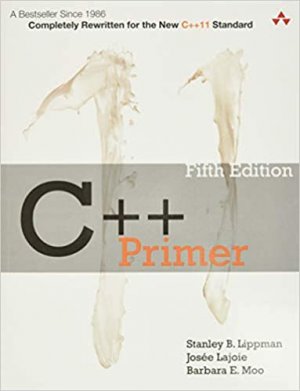
C++ Primer
by
Stanley B.Lippman, Josee Lajoie, Barbara E.Moo
Edition:
5th Edition
ISBN13:
978-0-321-71411-4
ISBN10:
0 -321-71411-3
591
C++ programming
Home
Books
C++ Primer
Similar Books
No books found
Title
Chapter: 3 /
Q: 3.43
Write three different versions of a program to print the elements of ia. One version should use a range for to manage the iteration, the other two should use an ordinary for loop in one case using subscripts and in the other using pointers. In all three programs write all the types directly
Chapter: 3 /
Q: 3.44
Rewrite the programs from the previous exercises using a type alias for the type of the loop control variables
Chapter: 3 /
Q: 3.45
Rewrite the programs again, this time using auto
Chapter: 3 /
Q: e.g3.1.1
Once the using declaration has been made, we can access name directly
Chapter: 3 /
Q: e.g3.1.2
Each using declaration introduces a single namespace member. This behavior lets us be specific about which names we’re using. As an example, we’ll rewrite the program from § 1.2 (p. 6) with using declarations for the library names it uses
Chapter: 3 /
Q: e.g3.2.1.1
Each way must be distinguished from the others either by the number of initializers that we supply, or by the types of those initializers. Table 3.1 lists the most common ways to initialize strings. Some examples
Chapter: 3 /
Q: e.g3.2.1.2
When we have a single initializer, we can use either the direct or copy form of initialization. When we initialize a variable from more than one value, such as in the initialization of s4 above, we must use the direct form of initialization
Chapter: 3 /
Q: e.g3.2.1.3
When we want to use several values, we can indirectly use the copy form of initialization by explicitly creating a (temporary) object to copy
Chapter: 3 /
Q: e.g3.2.1.4
The initializer of s8—string(10, \'c\')—creates a string of the given size and character value and then copies that value into s8. It is as if we had written
Chapter: 3 /
Q: e.g3.2.2.1
We use the same IO operators to read and write strings
total questions:
591
Previous
18
19
20
21
22
Next
Questions
591
Views
Best Answers
299
Points
5
×
Close
add reason
reason