
Discover
Questions library
Collections library
Find online teacher
login
Discover
questions library
Find online teacher
login
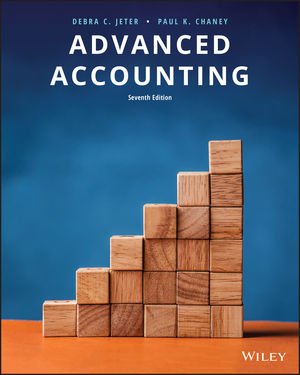
ADVANCED ACCOUNTING
by
Debra C.jeter, Paul K.Chaney
Edition:
7th edition
ISBN13:
978-1-119-37325-4
ISBN10:
263
Accounting
Home
Books
ADVANCED ACCOUNTING
Similar Books
No books found
Title
Chapter: 1 /
Q: 1.6
Define a tender offer and describe its use
Chapter: 1 /
Q: 1.8
Define some defensive measures used by target firms to avoid a takeover. Are these measures beneficial for shareholders?
Chapter: 1 /
Q: 1.9
Explain the potential advantages of a stock acquisition over an asset acquisition
Chapter: 1 /
Q: 1.10
Explain the difference between an accretive and a dilutive acquisition
Chapter: 1 /
Q: 1.11
Describe the difference between the economic entity concept and the parent company concept approaches to the reporting of subsidiary assets and liabilities in the consolidated financial statements on the date of the acquisition
Chapter: 1 /
Q: 1.12
Contrast the consolidated effects of the parent company concept and the economic entity concept in terms of:
Chapter: 1 /
Q: 1.13
Under the economic entity concept, the net assets of the subsidiary are included in the consolidated financial statements at the total fair value that is implied by the price paid by the parent company for its controlling inter- est. What practical or conceptual problems do you see in this approach
Chapter: 1 /
Q: 1.14
Is the economic entity or the parent concept more consistent with the principles addressed in the FASB’s conceptual framework? Explain your answer
Chapter: 1 /
Q: 1.15
How does the FASB’s conceptual framework influence the development of new standards?
Chapter: 1 /
Q: 1.16
What is the difference between net income, or earnings, and comprehensive income?
total questions:
263
Previous
11
12
13
14
15
Next
Questions
263
Views
Best Answers
299
Points
5
×
Close
add reason
reason